Old Imperial capital of Japan.
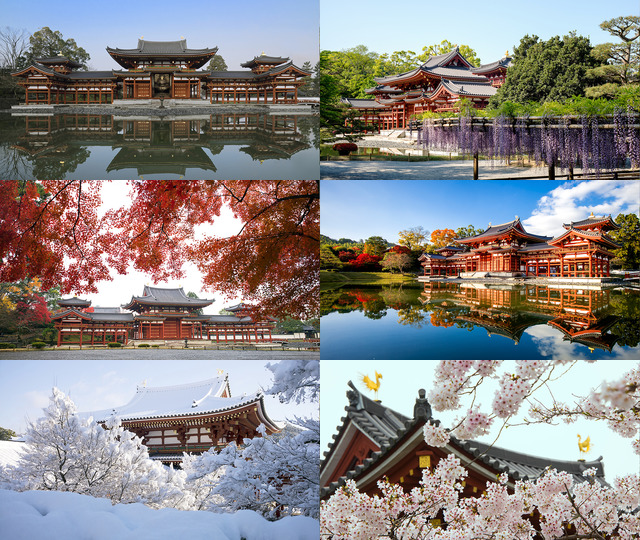
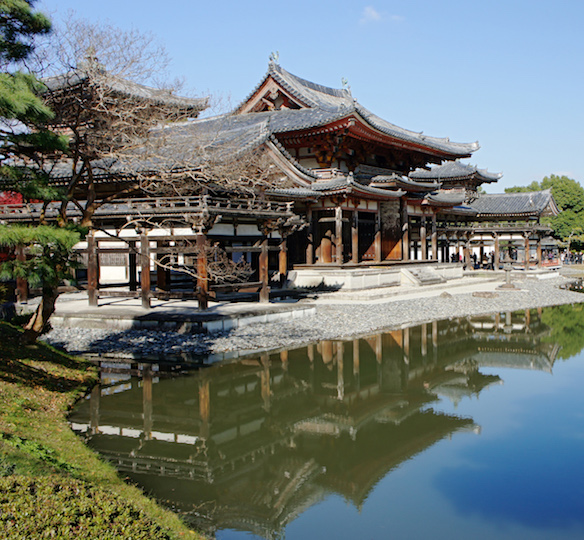
A Buddhist temple in the city of Uji in Kyoto Prefecture. It is jointly a temple of the Jōdo-shū and Tendai-shū sects.
Originally built in 998 as a rural villa of high-ranking courtier Minamoto no Shigenobu, it was purchased by Fujiwara no Michinaga after its original owner’s death. The villa was made into a Buddhist temple by Fujiwara no Yorimichi in 1052. The most famous building in the temple is 鳳凰堂, constructed in 1053. It is the only remaining original building, surrounded by a scenic pond; additional buildings making up the compound were burnt down in 1336, during the crisis surrounding the Kenmu Restoration and the rise of the 足利幕府.
Only surviving Heian building at 平等院, constructed in 1053.
A temple in the Sakyo ward of Kyoto, Japan, today associated with the Shōkoku-ji branch of Rinzai Zen. Officially named 慈照寺, it was designed by Ashikaga Yoshimasa (義政) to be his retirement villa who planned to have it converted to a Zen temple after his death. Construction began in 1482, though 応仁の乱 delayed its completion. Having retired to the villa, it is said Yoshimasa sat in the pavilion, contemplating the calm and beauty of the gardens as the 応仁の乱 worsened and Kyoto was burned to the ground. They say it represents the 東山 Culture of the 室町 period.
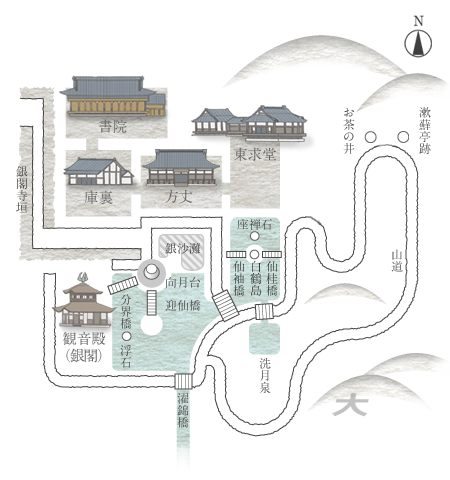
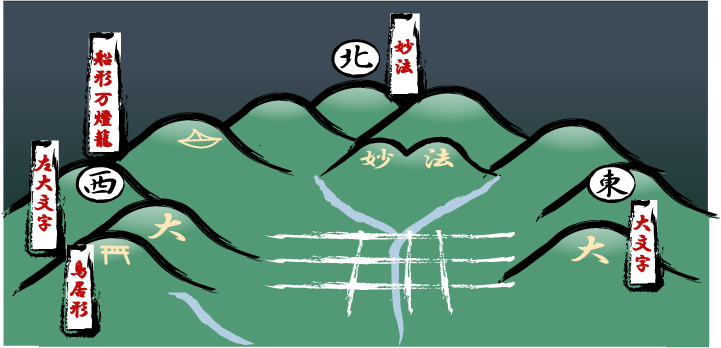
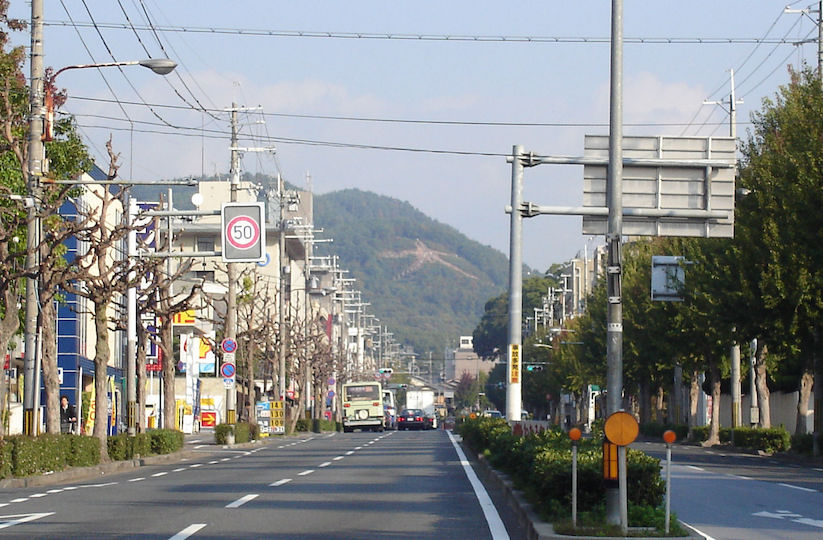
The most famous mountain upon which the bonfires of 五山送り火 are lit.
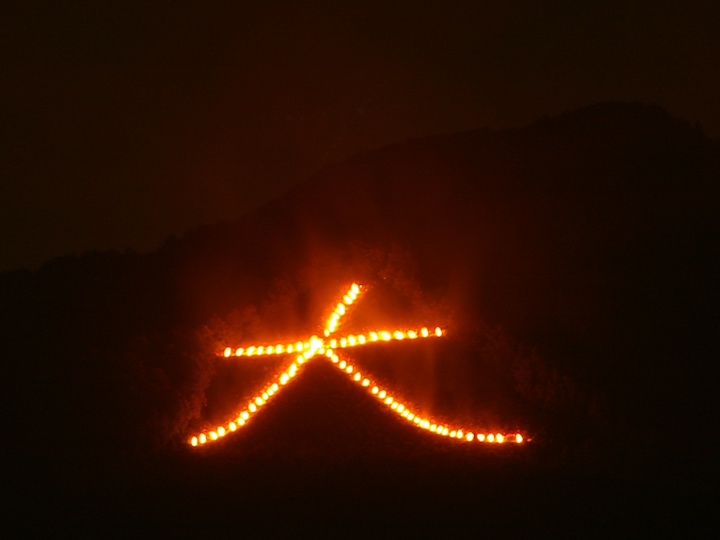
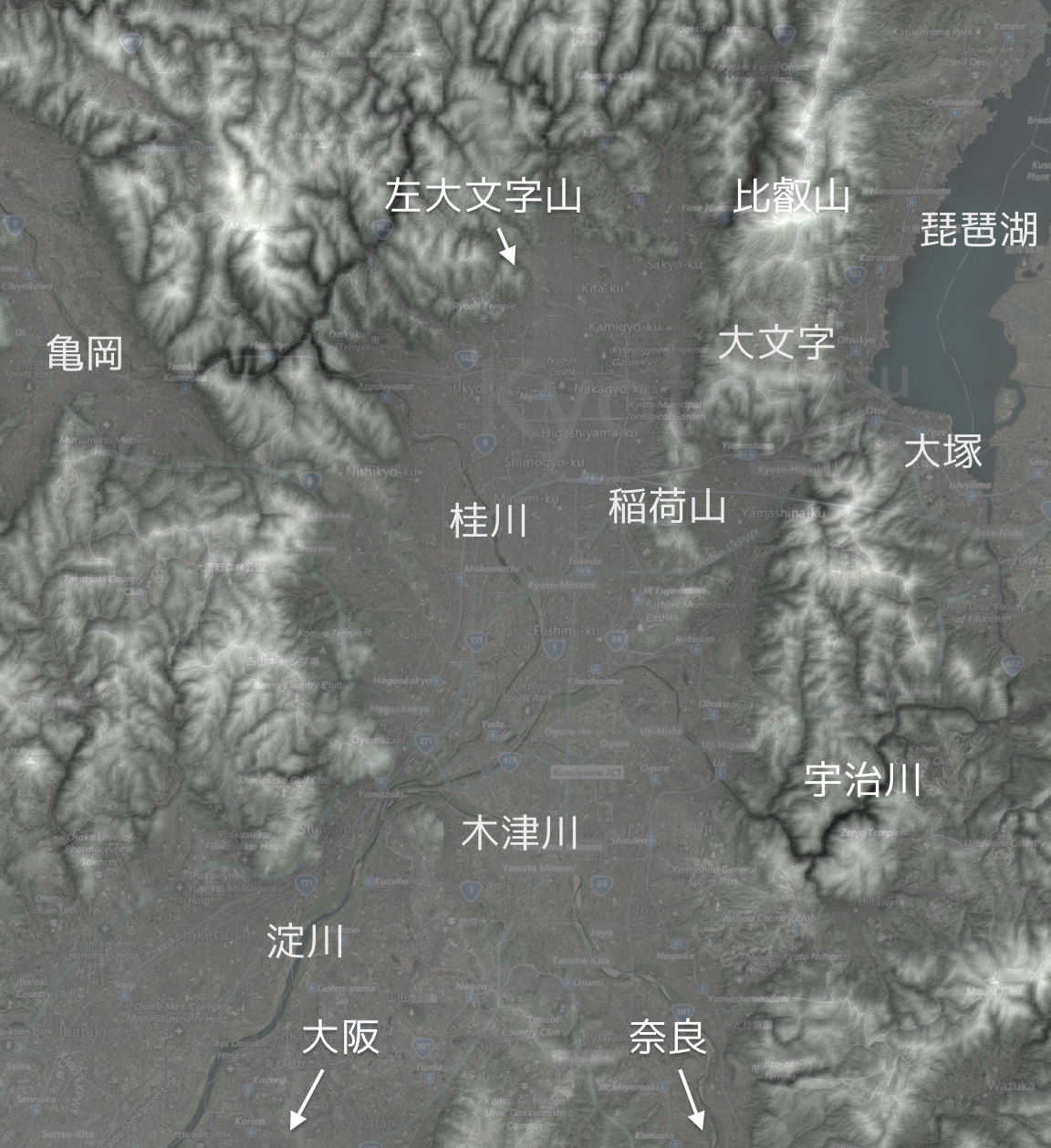
More commonly simply 大文字, the culmination of Obon festival involving several huge bonfires on the mountainsides around 京都.
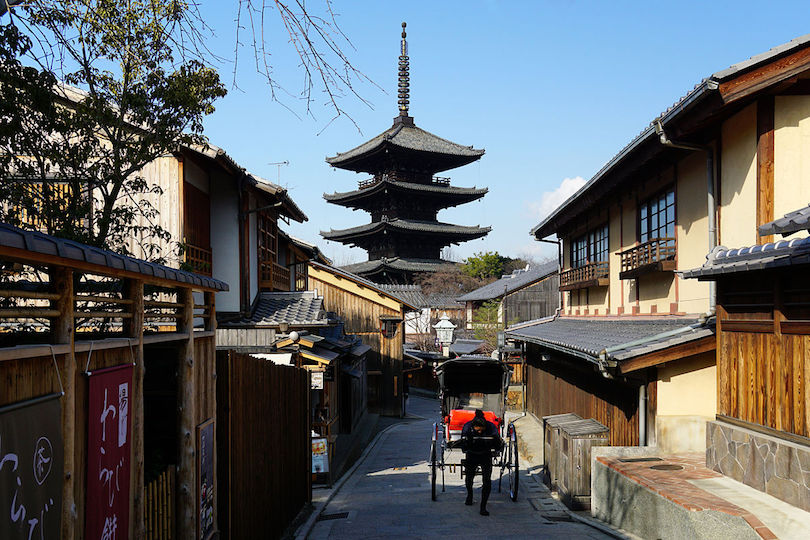
One of the eleven wards of Kyoto City, known for its historic preserved architecture.
A civil war that lasted from 1467 to 1477 that initiated, with the collapse of the 足利幕府, the Sengoku period. It is named after the era that it started in.
The shogunate successor of the Kamakura Bakufu, founded by Ashikaga Takauji (尊氏) who wrested control of the state from the Houjou clan.

The period name of the 足利幕府, named after the street where the third shogun, Ashikaga Yoshimitsu (義満), established his residence in 1379. 室町幕府 is also appropriate.
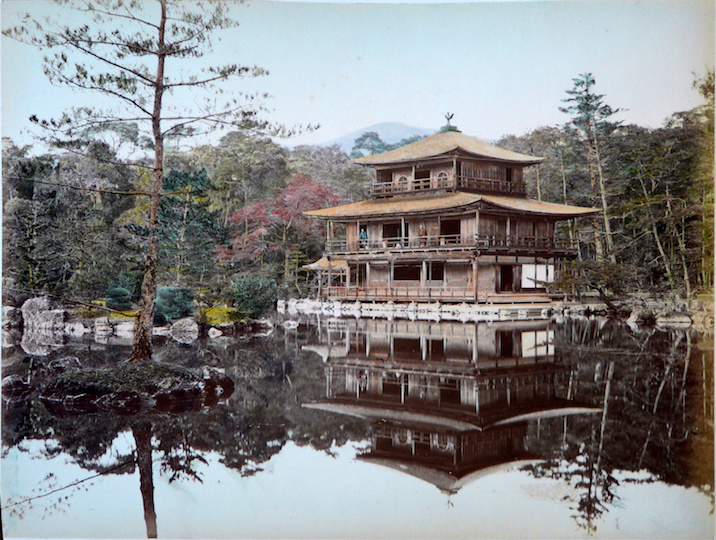
Officially 鹿苑寺, a temple in Kita-ku ward that was bought by Ashikaga Yoshimitsu (義満), grandfather of Yoshimasa (義政), and belonging to the Shōkoku-ji school of Rinzai Zen. It is the only building in its temple complex to survive the 応仁の乱.
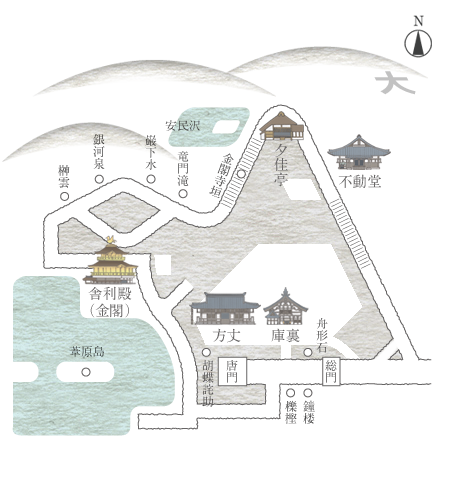
(In the above map, note the 大 represents 左大文字山, on the western side of Kyoto, not the one next to 銀閣寺!)
Another mountain with a 大 bonfire for 五山送り火, to the west of northern 京都.
A key shrine on the banks of 鴨川 in north 京都, first founded in 678, dedicated to 賀茂別雷, the thunder kami. It is the topic of John K Nelson’s Enduring Identities: The Guise of Shinto in Contemporary Japan (2000).
A key shrine just north of where the 鴨川 meets the 高野川, beleived to be founded in the sixth century, before 京都 became the imperial capital. It is dedicated to 玉依姫, mother of 賀茂別雷 (who has his own shrine dedicated to him, 上賀茂神社), and her father, 賀茂建角身.
The river whose course was altered to flow to the east of the imperial palace when 京都 became the imperial capital. 白河天皇 said the three things he couldn’t control were: monk-soldiers of 延暦寺, rolls of dice, and waters of 鴨川.
The other river of northern 京都.
The monastery founded by 最澄 on 比叡山 in 788, as directed by 桓武天皇, who founded 京都, to guard his city from the evil northeast direction. A Tendai monastery, its monk-soldiers caused tremendous grief for other monasteries, as well as emperors, shoguns, and daimyo, until Oda Nobunaga razed the complex in 1571 (though of course there’s that one building that survived).
法然 (founder of Japanese Pure Land Buddhism), 日蓮 (the Lotus Sutra guy), and 親鸞 (founder of True Pure Land Buddhism) all studied here.
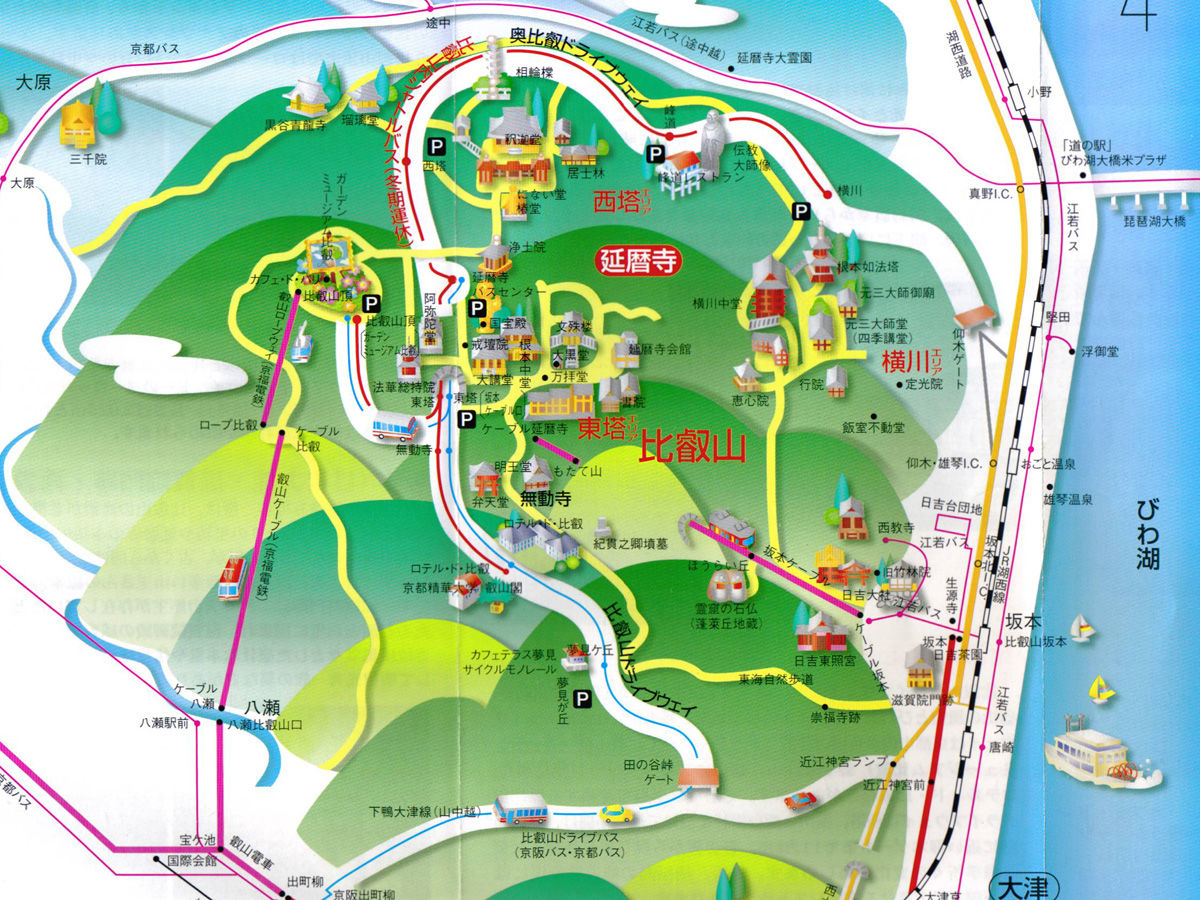
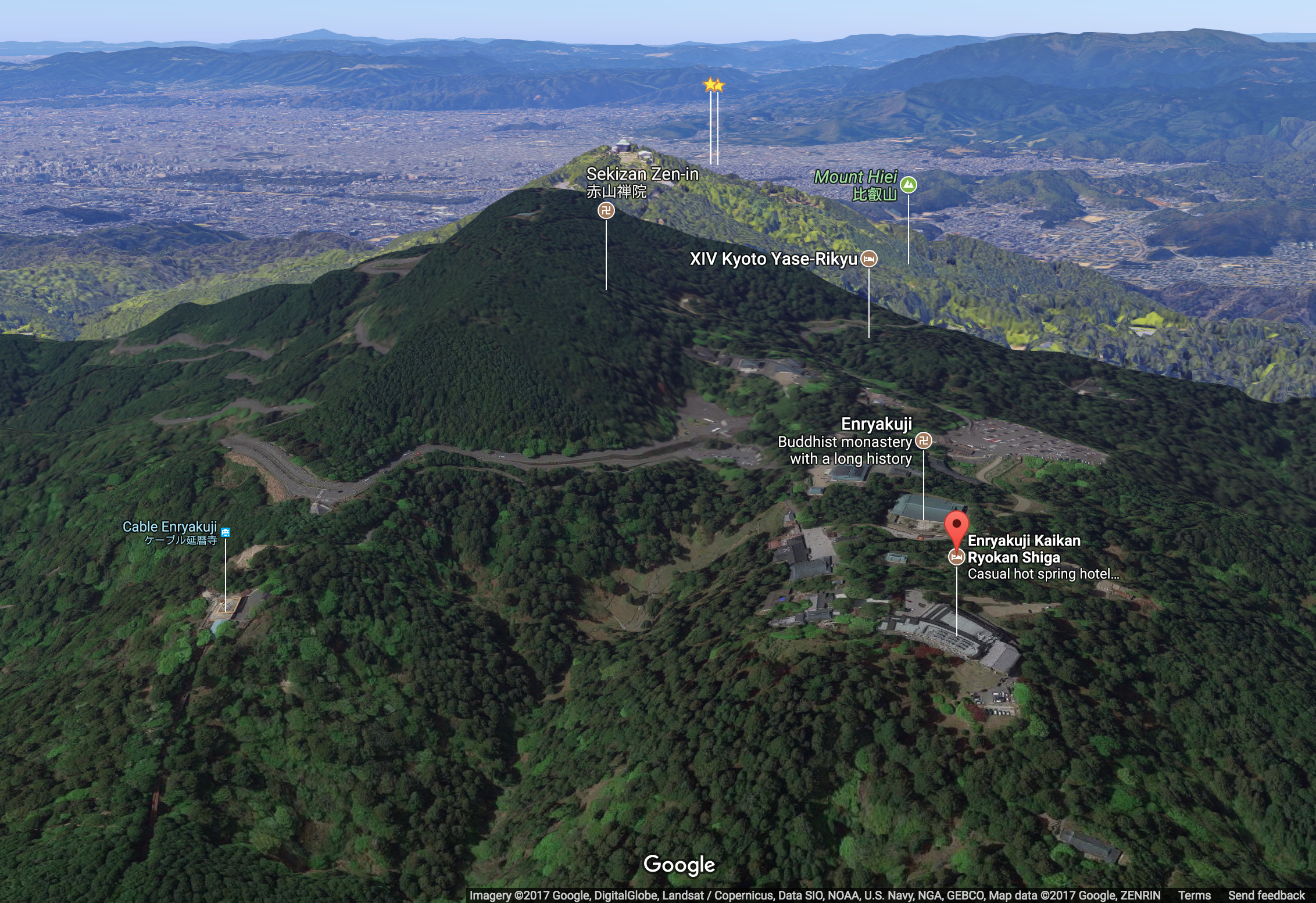
It’s technically in 大塚, in Shiga Prefecture.
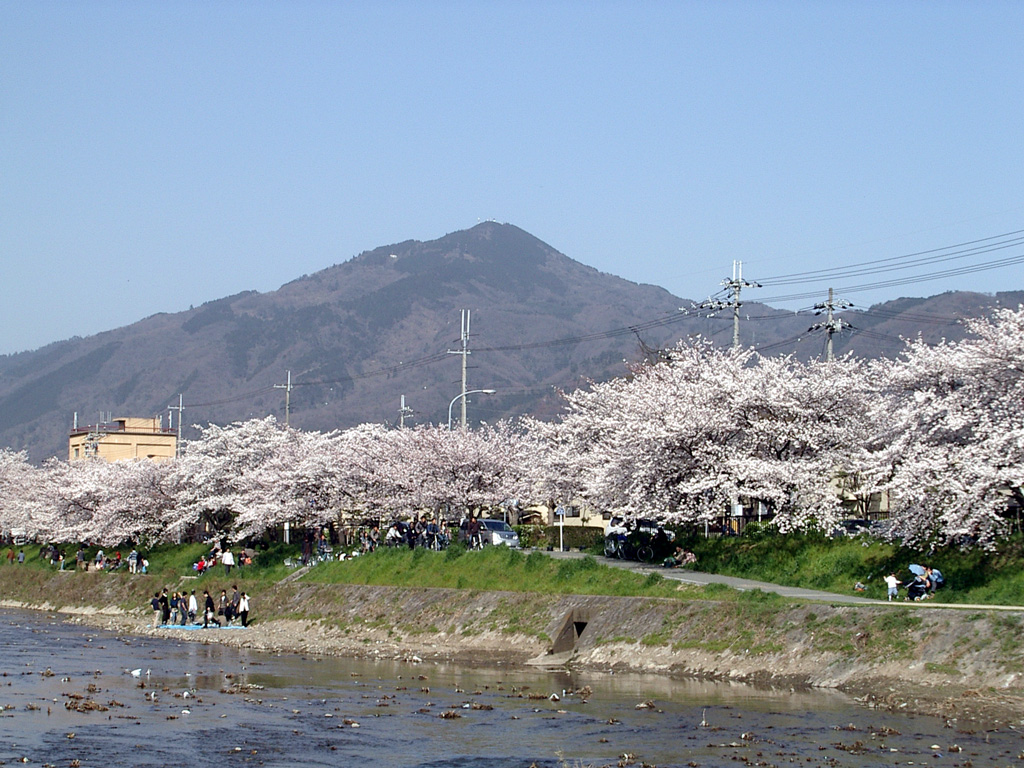
The tallest mountain northeast of 京都, near the peak of which sits 延暦寺.
Station K04 on the Karasuma Line.
One of the lines of the Kyoto Municipal Subway, and a major station, and the street under which the line runs for a bit.
The old old imperial capital from 710 to 794, roughly forty kilometers south of 京都.
Capital of Shiga Prefecture, the main port on 琵琶湖. Roughly eight kilometers east of 京都.
Largest freshwater lake in Japan, in Shiga Prefecture, north-by-north-east of 京都.
A prefecture and its eponymous capital city. The city has the second-largest daytime population in Japan.
Capital city of Hyougo Prefecture, a large port city thirty kilometers west of 大阪.
The region consisting of 京都, 大阪, and 神戸.
Temple of the Rinzai sect founded circa 1315. Oda Nobunaga was buried here by Toyotomi Hideyoshi. Hideyoshi’s tea master Sen no Rikyū, was also active here.